Jen Michalski is author of the novel The Tide King, winner of the 2012 Big Moose Prize, the short story collections From Here and Close Encounters, and the novella collection Could You Be With Her Now. Her work has been nominated for the Pushcart Prize. She is the founding editor of the literary quarterly jmww, a co-host of The 510 Readings and the biannual Lit Show, and interviews writers at The Nervous Breakdown. She also is the editor of the anthology City Sages: Baltimore, which Baltimore Magazine called a "Best of Baltimore" in 2010. She lives in Baltimore, MD. She tweets at https://twitter.com/MichalskiJen.

Forthcoming


Preview

Could You Be With Her Now (Dzanc Books, January 2013)


The Tide King (Black Lawrence Press, May 2013)

From Here (Aqueous Books, November 2013)


Your stars

I dreamed of my grandmother last night. My brother and I were in a bedroom of heavy old furniture and she walked out of the bathroom, shampoo in her hair. I haven't gotten dressed yet, she explained, and even hitched up her dress to show me she was naked underneath. I don't care, it's been so long, I answered, hugging her. She was real, soft skin and fat and hard bone and cold shampoo. How did that get out? She took a folded, multipaged, browning letter off the bureau. I wondered whether it was a letter from a former lover, a never lover, a wanted lover. I wondered what other secrets she had taken to her grave, what secrets you and I will take our last breath without speaking. I wonder, when I poke holes in the velvety blue paper and hold it to the light, whether you will believe they are stars. We can can pretend they are long dead,their light still reaching us. We will be the last thing they touch. They will be the last thing that touches us, our eyes shut, covers close, pretending we haven't woken.

Interview with Justin Kramon at the Nervous Breakdown

The Nervous Breakdown just posted my interview with Justin Kramon, author of Finny (Random House, 2010), a coming-of-age story about a fiery 14-year-old girl, Finny. Justin on writing from the female perspective:

I think that I’m basically a woman. I don’t know why, but female points of view have just always been fascinating to me. Maybe it’s because I find myself and my own hang-ups boring. I’m not sure. I also feel like a lot of the topics that excite me as a writer—relationships, sex, psychology, food, awkward social situations—are ones that women have a lot to say about.


To read more, go here.

Gene Frequency

I got up early this morning because the community organization in my neighborhood makes an arrangement every year to have dumpsters available for several hours on a Saturday for residents to get rid of big junk. Of course, there are some limitations—no computers, no animal carcasses (why this even needed to be listed in the flyer is a mystery), no paint cans or toxic materials, but if you have a broken chair or a pile of mismatched floor tiles or a broken Christmas tree or whatever, it's a great deal.

Of course, I went as soon as the dumpsters opened and dropped off an old weight bench, minus weights and bar, and a huge gilded mirror with two shelves and Greek stylings that had been hanging over my grandparents' couch for many years, displaying Hummel statues. Of course, I'd gotten rid of the Hummel statues 5 years ago when I moved in, but the shelf had been sitting in the basement since then, collecting dust and coming further apart.

Although I hate to part with my grandparent's things, now that both of them are dead, I've begun to realize that the most important of my grandparent's things are deep inside me, burned into my DNA. My grandfather would be the one who would get up at the crack of dawn to take stuff to the dumpster (and, unfortunately, he would probably bring home more junk from it). I'm sure he was proud of me today. I also see other parts of my grandfather in me, like my habit of bringing home baseballs and other sporting equipment people have abandoned or forgotten on the playground. Once I got my dog Celie a really threadbare but usable soccer ball that she would chase all over the yard. I collect volume upon volume of free books in the same way my grandfather would scour thrift stores for ten-cent copies of Shakespeare plays and J.D. Salinger books and sheet music to give to me.

I see my grandmother's DNA in me as well. When I moved in I had great plans to overhaul the garden, which had been in disarray for years after they moved in with my mother. I spent one summer weeding, the next planting herbs, others experimenting with cucumbers, tomatoes, bell peppers. I found a picture today of my grandmother in the garden. Hers looks so much better than mine, flowers bursting from every available inch of the garden my grandfather dug in their concrete backyard. The lavender is several feet; geraniums push themselves into pansy beds. I actually don't remember my grandmother's garden very well, even as an adult. I'd not been interested in it; it was enough work to go over and mow their front lawn every two weeks in the summer or drive them to the nursery every spring. But now, I see why she loved it so, and I'm glad that that "switch" turned on in me after being dormant for many years.

It's going to be painful to leave this house, which is the plan in the next year (of course, with the economy the way it is, it's hard to say). But I realized that, even though I can only take my grandparent's bedroom set (not particularly valuable, but very valuable in my heart), I really won't be leaving much behind.

Story Archives: A Dog's Life

For P, whose beautiful dog died yesterday:

The dog approaches you cautiously as you walk up to your apartment building. You are not a dog person, but this one, a smallish terrier mutt of some kind with matting white hair, charms you with its neediness, its act of singling you out—from several hundred thousand other city dwellers—for help.

To read more, go here.

(Photo from Evolver.)

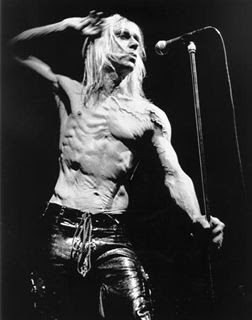
Raw power


I'm looking forward to the Dzanc Books Write-a-Thon this weekend because I have a lot of work left on this draft of my novel. It's been surprising and gratifying to see the novel find its focus and shape, even as I have had to let go of 100 pages, some of which was, at least in my opinion, pretty good. I suspect we are not the only group of artists who experience such loss. How many times did Picasso or Motherwell paint over a canvas until a piece was completed? How many riffs of choruses did Lennon and McCartney not wind up using, no matter how great, or even Mozart? (Of course, we likely know, at least for the Beatles, since record companies will release any two notes together on a deluxe edition outtake CD box set.)

I think that this is the problem—we know how hard it is to make music, and we often listen to its many progressions, from raw demo to polished single. But we never know how much authors have struggled, except if they have died before a book has been completed (and the book published unfinished). I think publishers should make it practice to release deleted scenes and earlier versions of books, even if just online at the author's page, so the public can see the many dark days and nights of searching for what one is actually trying to say (And, as one knows, what one wants to say in a story or novel is usually not the same as what needs to be said.)

I think I might publish some of what I've written this upcoming weekend here on the blog so you can see my struggles and successes (or perhaps, just struggles). I've always been an impatient writer, spurred by so-called inspiration and raw power and less by the refining process. But a writer's patience, in writing, is just as important as a writer's talent. I've raised Frankenstein from the dead, for sure, but I need to make him look like Brad Pitt.

Interview with Jane Mendelsohn at The Nervous Breakdown


My latest interview at The Nervous Breakdown is with Jane Mendelsohn regarding her latest novel, American Music:

When I write I am trying to have and to create an experience. The reader’s hands and eyes and mind on the book release the stories which appear to be the writer’s stories, but if they mean anything will also be the reader’s stories. They will elicit thoughts and emotions in the reader, memories and visions.


To read more, go here:

http://www.thenervousbreakdown.com/jmichalski/2011/07/jane-mendelsohn%E2%80%99s-opus/

Dzanc Books 2011 Write-A-Thon


Once again I will be participating in the Dzanc Books Write-A-Thon, which will take place July 21st through July 24th. I plan to spend many hours those days writing, only taking breaks to eat and other necessities.

Not only will it be a treat for me to have a dedicated time for my writing, but hopefully this will also benefit Dzanc. Dzanc is a wonderful non-profit independent publishing company that supports literary magazines, small presses, and publishes fantastic work, including my own collection of novellas, which will be published in early 2013. Also, Dzanc funds writing programs in public schools where creative writing classes are not offered. They also sponsor the Dzanc Prize, which benefits not only the writer awarded it, but pays for a community-based project like writing workshops in prisons, cancer centers, or working with immigrant populations.

I would be honored if you would sponsor my writing this year. Your dollars will help Dzanc Books to continue to support great writing and foster the creative talent of public school kids. If you'd like to pitch in, please click on the following link which will take you to a page where you can make a donation:

http://www.dzancbooks.org/write-a-thon-2011/

Please remember to do so in my name, and good luck with the big drawing they'll have for all people that donate!

Deleted Scenes: Welcome to America

But fourteen days later, the calendar on the door steward’s quarters read November 7, 1895. The other women passengers hurried to work smoothing and putting on their best clothing, gathering up their toiletries and closing their trunks, tying their sacks. The water around the steamer had taken on a greenish cast as the port came closer, and the men hung over the bulwarks to get a better view as the ship docked at Pier 9 in Locust Point. One man, full of whiskey and rot, swung Safine up on his shoulders to get a view of Fort McHenry.

“Ere she fly,” he said, his wooly coat on the backs of her legs. “The American flag. Now all yer dreams be born, lass.”

Red, white, and blue, it furled lazily, a cat tail against the sky, an indifference, and perhaps cockiness, packed into its folds. The Baltimore harbor opened behind it, and then the city itself, not unlike the one from which they had departed. The gangplank lowered.

“Luggage here, drop your luggage here. Men this way, women and children this way.” A man at the bottom waved his arms and the sea of immigrants parted by sex. Safine followed Matka to the registry room. Since leaving Reszel, life had become nothing but lines, a blur of authoritative, bored men herding them here or there, this way, that. Safine’s stomach, worn from vomiting, scraped itself out from the inside. If she would eat, she would throw up, but if she did not eat, she would faint.

“Matka, I’m hungry.” Safine held her guts as Matka pulled her along in the ladies line for the doctor, a vulture grip on her shoulder.

“Shh.” Her grip tightened. “Hold your tongue and your stomach. Whatever you do, don’t throw up your breakfast. They send us back on the ship.”

A doctor looked at Safine’s tongue and eyes and ears for bumps or swelling, her hair for lice, and even though she was convinced she turned all shades of green and purple and white, he waved her past after a few seconds of inspection. At the Bureau of Immigration Makta was forced to unearth the few American dollars she had wrapped in her bosom, removing her scarf, her coat, and loosening her corset.

“Does it cost money?” Matka glared at the man at the table. “Nobody told us it costs money to enter America.”

“It doesn’t cost money.” The man did not look at her as he scanned the ship’s manifest against their papers. “But it cost money to live here. You think you just come off the boat and lady liberty is gonna feed ya? You ain’t got no money, we just send you back.”

It had never occurred to Safine that they could be sent back. Eyeing the lines of immigrants, the two hours they had already been there, she began to hope that maybe they would.

“Maria Wysecki?” The man eyed Matka, and she nodded. He looked at Safine. “Safine Wysecki? Welcome to America.”

They moved to a final pen to wait for Ojciec, a wooden terminal that leaked cold November air into his cracks. Matka had carefully recorded the date of arrival they had given her at the Bremen station and sent it to Ojcie’s address in Baltimore, the address from which they had not received a letter for six months. Safine had not asked Matka why Ojciec had stopped writing, and Matka had not answered, convinced that they only thing to do was to come. Through the windows of the holding area Safine gazed at the stark, bare branches of Fort McHenry Park pressed against the dull sky, which stared back at her indifferently as they waited. Matka motioned her to the door, and they walked the perimeter of the fence separating the shipyard from the town, looking for a man, any man, who might step forward and claim them.

The men looked past them, their hands bunched into their coat jackets, their chins in their collars. A gust blew snot out of Safine’s nose. The sun, an orange, dropped behind the trees, and Locus Point descended into unwelcoming darkness. It was hard to see where things would head, and Safine wished to be herded somewhere once more, somewhere warm, quiet, safe. But as others left the terminal with their relatives, the press of bodies that had insulated them against the chill of the wind thinned. They were in America, but they were not home.

(deleted scene from the novel The Tide King

Interview with Gay Life Magazine


My interview with Terri Solomon in Baltimore's Gay Life Magazine is up!

Jen Michalski is the author of Close Encounters, a collection of short stories published in 2007 by So New Media. The title comes from the “strange little world lurking in a lot of my writing,” said Michalski. Stories feature “in-fetu twins, personality disorders, missing children, surrealist airports, little girls who find time machines in their neighborhoods, and Whitney Houston.”

Michalski has another collection coming out in early 2013 from Dzanc Books. It will include a novella I Can Get to California Before It's Time for Dinner. Her novella May-September won first place in last year’s Press 53 Open Awards.

Michalski spoke to Baltimore Gay Life about her recent writing, the 510 Reading Series, and wrestling with the term “gay writer.”


To read more, go here: